When Should You See a Doctor About a Mole or Skin Lesion?
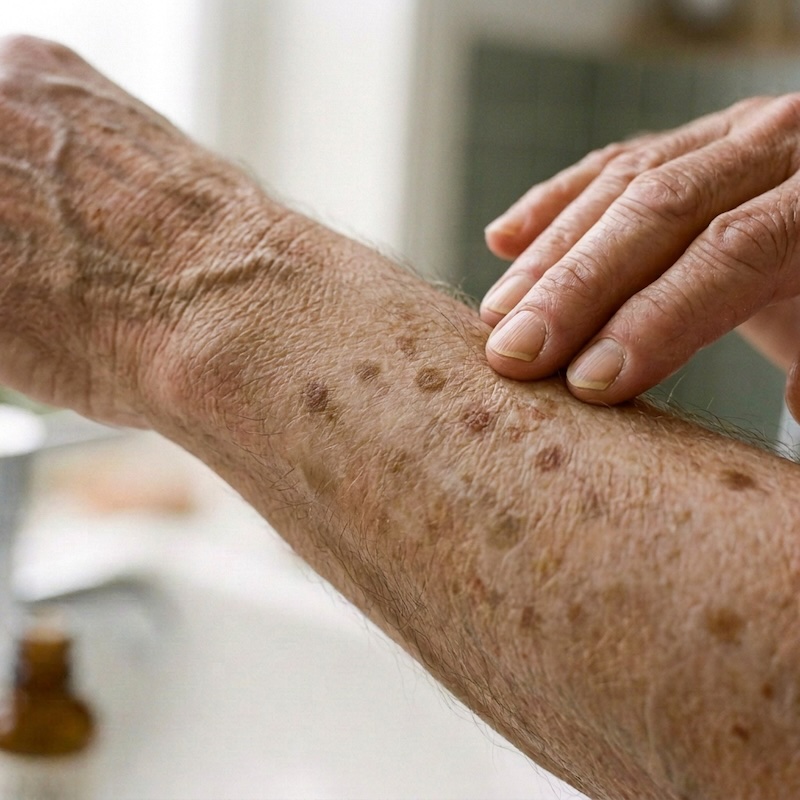
Most moles and skin lesions are harmless. However, a changing mole can occasionally be an early sign of skin cancer, including melanoma. So knowing what to look for matters.
When skin cancer is found early, treatment is often simpler and more effective. Therefore it helps to know your own skin, and to seek advice whenever you notice something new or unusual.
At The Watermill Clinic in Wickham, we offer private, GP-led mole and skin lesion checks for patients across Wickham, Fareham, Winchester, Bishop’s Waltham and the surrounding Hampshire area.
The ABCDE Rule: What Should You Look For?
One useful way to remember the warning signs of melanoma is the ABCDE rule.
A is for Asymmetry. In other words, one half of the mole or lesion looks different from the other half.
B is for Border. Specifically, the edges look irregular, uneven, blurred or poorly defined.
C is for Colour. The mole contains several shades, such as brown, black, red, blue or white.
D is for Diameter. The mole is larger than about 6mm, roughly the size of a pencil eraser. However, melanomas can be smaller, so never rule one out on size alone.
E is for Evolving. Change matters most of all. Look for a mole that is altering in size, shape or colour over weeks or months.
Also watch for new symptoms, such as bleeding, crusting, itching, persistent inflammation or pain.
Not every melanoma follows the ABCDE rule. A new or unusual lesion that looks noticeably different from your other moles is worth having assessed too.
For more detail, including photographs, see Cancer Research UK’s guide to melanoma symptoms.
What if you have lots of moles?
If you have many moles, keeping track of them all can be difficult.
Generally, examining your skin regularly helps. Photographing your existing moles also makes a changing mole much easier to spot over time.
Remember the areas that are harder to see, including your back, scalp and the backs of your legs. Asking a partner or family member to look can help.
If you have numerous moles, struggle to monitor them, or simply have concerns, a professional skin examination may be worthwhile. At The Watermill Clinic we offer full-body skin checks and mole mapping for a more comprehensive assessment.

When to book a check for a changing mole
Consider arranging a medical assessment if you notice:
- A new mole or skin lesion that looks unusual
- An existing mole changing in size, shape or colour
- A lesion that repeatedly bleeds or crusts
- A sore or skin lesion that does not heal
- A mole that becomes persistently itchy, painful or inflamed
- A mole that looks noticeably different from your others
- A persistent lump, sore or scaly patch that worries you
Of course, not every concerning lesion is melanoma. Other skin cancers, including basal cell carcinoma and squamous cell carcinoma, can look quite different. For example, they may appear as persistent sores, scaly areas or new growths.
If you notice a worrying change, book promptly rather than waiting for a routine skin check.
What happens during a mole check
At The Watermill Clinic in Wickham, our GP-led dermatology service assesses moles and other skin lesions in detail.
Dr Rina Adnan-Demade, our GP with a specialist interest in dermatology, combines general practice experience with additional dermatology training. In addition, she works in the Dermatology Department at University Hospital Southampton.
During your appointment, the doctor examines your skin lesion and may use a dermatoscope where appropriate.
A dermatoscope is a specialist handheld instrument. It lets the doctor see structures within a mole in far more detail than the naked eye allows.
Depending on the findings, the next step may be reassurance and monitoring, treatment, further investigation or referral.
Never ignore a changing mole
Most moles and lesions turn out to be harmless. Even so, do not ignore a change.
Have you noticed a new or changing mole, a persistent skin lesion, or anything that worries you? If so, we can assess it and advise on the right next step.
Get started
Your health, your way
The Watermill difference, more than just a skin check
Unlike many standalone skin clinics, The Watermill Clinic offers GP-led dermatology, so your skin assessment comes from a doctor who can also look at the rest of your health. If we find something that needs more than reassurance, we can often arrange minor surgery, a biopsy, histopathology or onward referral without unnecessary delays.
Expert skin assessment when you need it
Whether you are worried about a changing mole, living with a long-term skin condition or simply want a full-body skin check, our experienced team is here to help.